
In this article (6 sections)
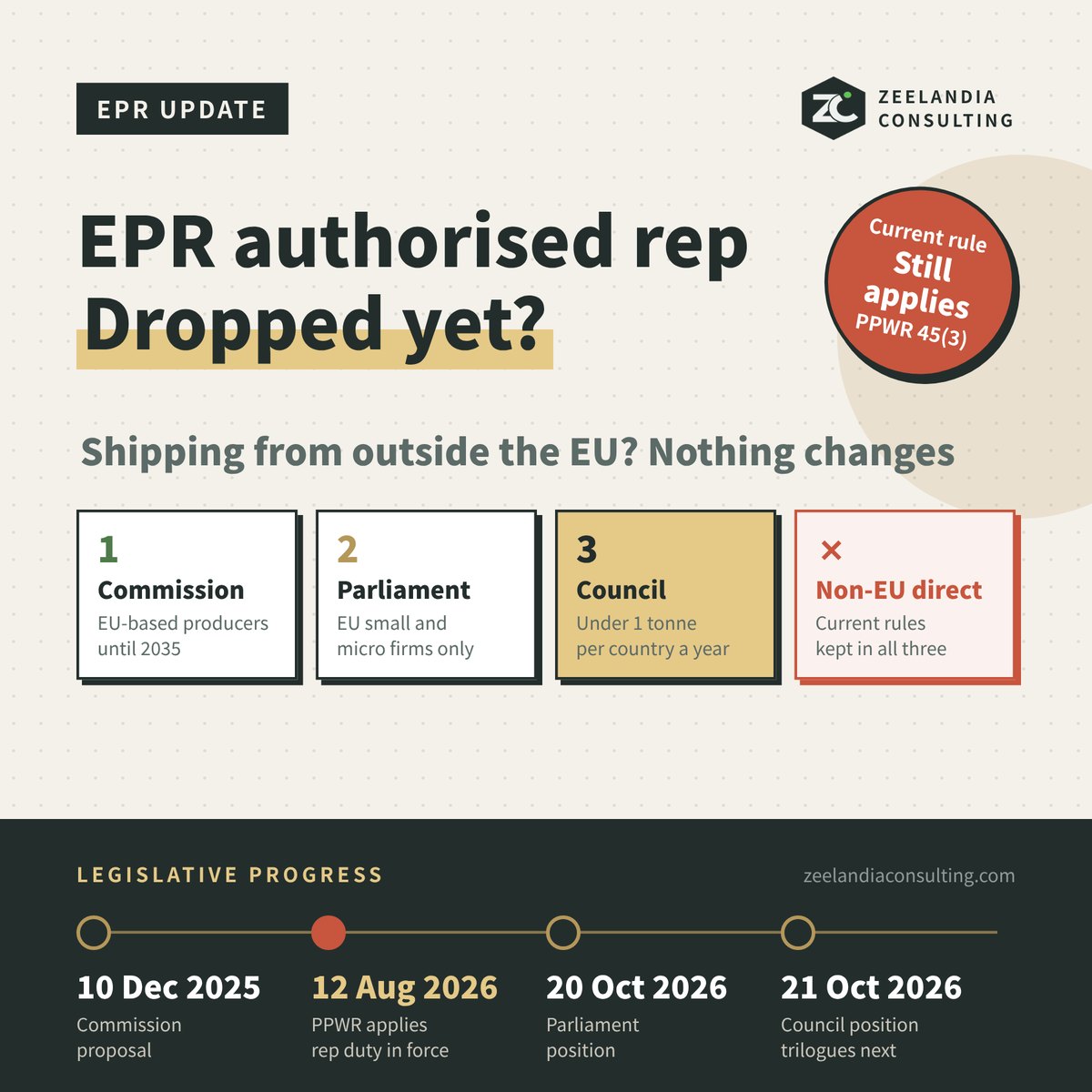
Is the obligation to appoint an EPR authorised representative being dropped? Not yet. As of November 2026, the authorised representative obligation in Article 45(3) of the Packaging and Packaging Waste Regulation (PPWR) applies as published, and has done since 12 August 2026. The European Parliament adopted its position on 20 October and the Council of the EU on 21 October. Trilogue negotiations come next. The two positions differ considerably, and there is no final text yet.
The more important point for non-EU exporters: the Commission, Parliament and Council versions all relieve only producers established in the EU. If you sell directly from a third country such as Taiwan to end-users in the EU, nothing has changed.
Key points
- The current rules still apply: neither PPWR Article 45(3) nor Article 56(3) of the Batteries Regulation has been suspended.
- Parliament: only EU-based small and micro enterprises would not need an authorised representative, until a circular economy act enters into force or 2035, whichever comes first.
- Council: based on packaging volume, under 1 tonne per Member State per year, until 2032.
- Producers established outside the EU keep the current rules in all three versions.
- Only the duty to appoint a representative would be suspended. Registration, reporting and fees continue.
Which rule is being changed?
Extended producer responsibility (EPR) requires producers to register, join a compliance scheme, report and pay fees in each country where they sell. Where a producer sells directly to end-users in another Member State without being established there, it must appoint an authorised representative for EPR in that country by written mandate. For the basics, see What is EPR? EU EPR registration guide.
On 10 December 2025, as part of the Environmental Omnibus (Omnibus VIII), the Commission proposed two suspensions:
| Proposal | Procedure | Covers |
|---|---|---|
| Regulation COM(2025) 982 | 2025/0395(COD) | Batteries Regulation (EU) 2023/1542 Article 56(3); Packaging Regulation (EU) 2025/40 Article 45(3) |
| Directive COM(2025) 983 | 2025/0396(COD) | Authorised representative rules for waste (textiles, footwear), waste electrical and electronic equipment (WEEE) and single-use plastics |
Under the Commission’s version, EU-established producers could choose whether to appoint an authorised representative, until 1 January 2035. Producers established in third countries, which sit outside Member States’ enforcement powers, would keep the current rules (COM(2025) 982, recital 6).
The file stalled for a while: in June 2026 the Council said it would not continue work on the two proposals at that stage, citing reservations from most Member States. Parliament and the Council revived it in October with narrower versions.
How do the three versions differ?
| Commission proposal (10 Dec 2025) | European Parliament (20 Oct 2026) | Council (21 Oct 2026) | |
|---|---|---|---|
| Who would not need to appoint | All EU-established producers | EU-based small and micro enterprises only (fewer than 50 employees, annual turnover or balance sheet under EUR 10 million) | EU-established producers of any size, in each Member State where they place less than 1 tonne of packaging per year |
| Test | Established in the EU | Company size | Packaging volume per Member State per year |
| Suspended until | 1 January 2035 | Entry into force of a circular economy act or 1 January 2035, whichever comes first | 1 January 2032 (Commission review by end of 2030) |
| Published scope | Batteries, packaging; textiles, footwear, WEEE, single-use plastics | Both texts adopted (616 to 9, and 612 to 8) | Packaging |
| Producers outside the EU | Current rules kept | Current rules kept | Current rules kept |
Parliament also stressed that the suspension covers only the appointment of an authorised representative: other EPR obligations, such as waste prevention and fees, are not affected. It called for better information exchange between Member States, interoperable digital systems and common reporting requirements for companies. The Council added a safeguard: where an exempted producer breaches its EPR obligations, the competent authority can order it to appoint a representative.
Which situation are you in?
Situation 1: you sell directly from outside the EU to consumers or business end-users in the EU (cross-border e-commerce, your own website, direct shipments) You are a producer established in a third country. All three versions keep the current rules. Where a representative is required today, it is still required.
Situation 2: you sell through an EU importer or distributor The party that first places the product on the market in a country, usually the importer, carries the EPR obligations there. If your importer sells on directly into other Member States, the outcome affects them, and with it your contract and the data you supply.
Situation 3: your group has an EU subsidiary (for example a Dutch B.V.) that sells directly into other Member States This is the case to watch, because the two positions point in opposite directions:
- Parliament’s test is company size. If the final text follows the EU SME definition (Recommendation 2003/361/EC), headcount and turnover of linked enterprises in the group are added together, so a subsidiary of a large group would usually not count as small.
- The Council’s test is packaging volume per country. Under 1 tonne a year in a given country could qualify, however large the group.
Which kind of producer are you?
The authorised representative question starts with who the producer is, then where that producer is established. Take three minutes to check:
- Are your EU customers end-users, or importers who resell?
- Under your trade terms, who is the importer of record in the EU?
- Does your group have an EU subsidiary, and does it sell across borders?
Three common misunderstandings
“EPR has been suspended.” Only the duty to appoint an authorised representative is in question. National registration, scheme membership, packaging reporting and fees continue under every version.
“Parliament has voted, so we can drop our representatives now.” Neither position is law. A suspension takes effect only once Parliament and the Council agree the same text and it is published in the Official Journal. Until then, PPWR Article 45(3) and Batteries Regulation Article 56(3) apply as written.
“We are an SME, so it applies to us.” Parliament’s version covers small and micro enterprises established in the EU only. A non-EU SME shipping directly from abroad is outside it. The Council’s version looks at packaging volume, not company size.
What happens next?
- Trilogues: the Council presidency says it intends to start negotiations with Parliament as soon as possible. No date has been set. The positions differ on size versus volume and on 2032 versus 2035, so a compromise is likely.
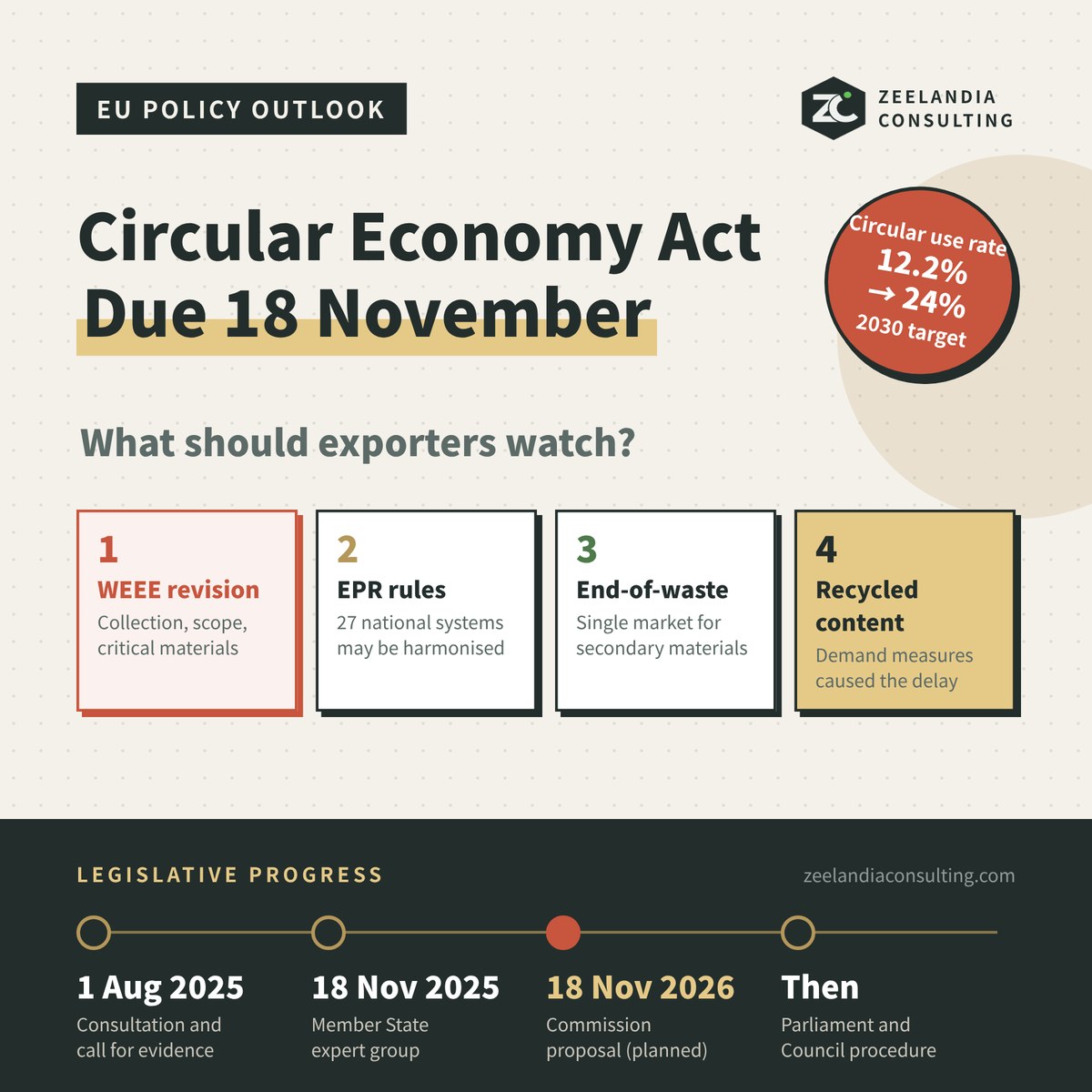
- Circular Economy Act: the Commission is expected to propose it later in 2026, possibly harmonising national EPR schemes further. Parliament’s end date is tied to it.
- National enforcement: penalties are set by each Member State, so the same situation may be handled differently from country to country.
We track progress on the PPWR page of our regulatory radar.
There is no standard way to arrange representatives
Two companies selling into the same five countries may end up with a representative in each, with their importer handling it, or with a shipping model that needs none. Which fits depends on your customers, volumes per country and contract terms, and it may need revisiting once the final text is agreed.
Bring last year's shipment and packaging weights by country and book a 30-minute call →
FAQ
What is an EPR authorised representative?
A representative appointed by written mandate in a Member State where a producer sells directly to end-users but is not established. It fulfils that country’s EPR obligations (registration, reporting, fees) on the producer’s behalf. For packaging the rule is PPWR Article 45(3); for batteries, Article 56(3) of the Batteries Regulation.
Has the EPR authorised representative obligation been removed?
No. Parliament (20 October 2026) and the Council (21 October 2026) have each adopted negotiating positions. Nothing changes until a text is agreed and published in the Official Journal. The current rules apply.
Do producers outside the EU still need an EPR authorised representative?
Yes, where the current rules require one. The Commission, Parliament and Council versions all keep the existing rules for producers established in third countries.
How is the Council’s 1 tonne threshold calculated?
Under the Council position of 21 October 2026, it is the quantity of packaging made available per Member State per calendar year; the suspension applies below 1 tonne. The final threshold depends on the agreed text.
Next step: how ZC can help
From the Netherlands, ZC helps companies arrange EPR authorised representatives across Member States and follows the negotiations as the final text takes shape. See our EPR registration and authorised representative service.
Next step: have you considered these three options?
Sources · European Parliament press release, 20 October 2026: Waste: MEPs back simplified rules for small businesses · Council of the EU press release, 21 October 2026: Council agrees negotiating stance to cut red tape for small packaging producers · European Commission proposal COM(2025) 982, 10 December 2025 · Legislative Observatory 2025/0395(COD) · Legislative Observatory 2025/0396(COD). This article is general information and not legal advice for any specific case. Obligations are defined by the Official Journal of the EU.
EPREPR authorised representativeauthorised representativePPWRPPWR Article 45batteriesWEEEtextilesEnvironmental OmnibusOmnibus VIIIExtended Producer Responsibility