
In this article (11 sections)
- 1. What does a PEFCR specify?
- 2. Who writes a PEFCR?
- 3. The Commission’s official PEFCR list (November 2026)
- 4. Can PEFCRs that are not on the list still be used?
- 5. What if my product has no PEFCR?
- 6. How does a PEFCR differ from a national carbon footprint PCR?
- 3 things to check now
- Common misconceptions
- FAQ
- Next in the series
- Legal sources and references
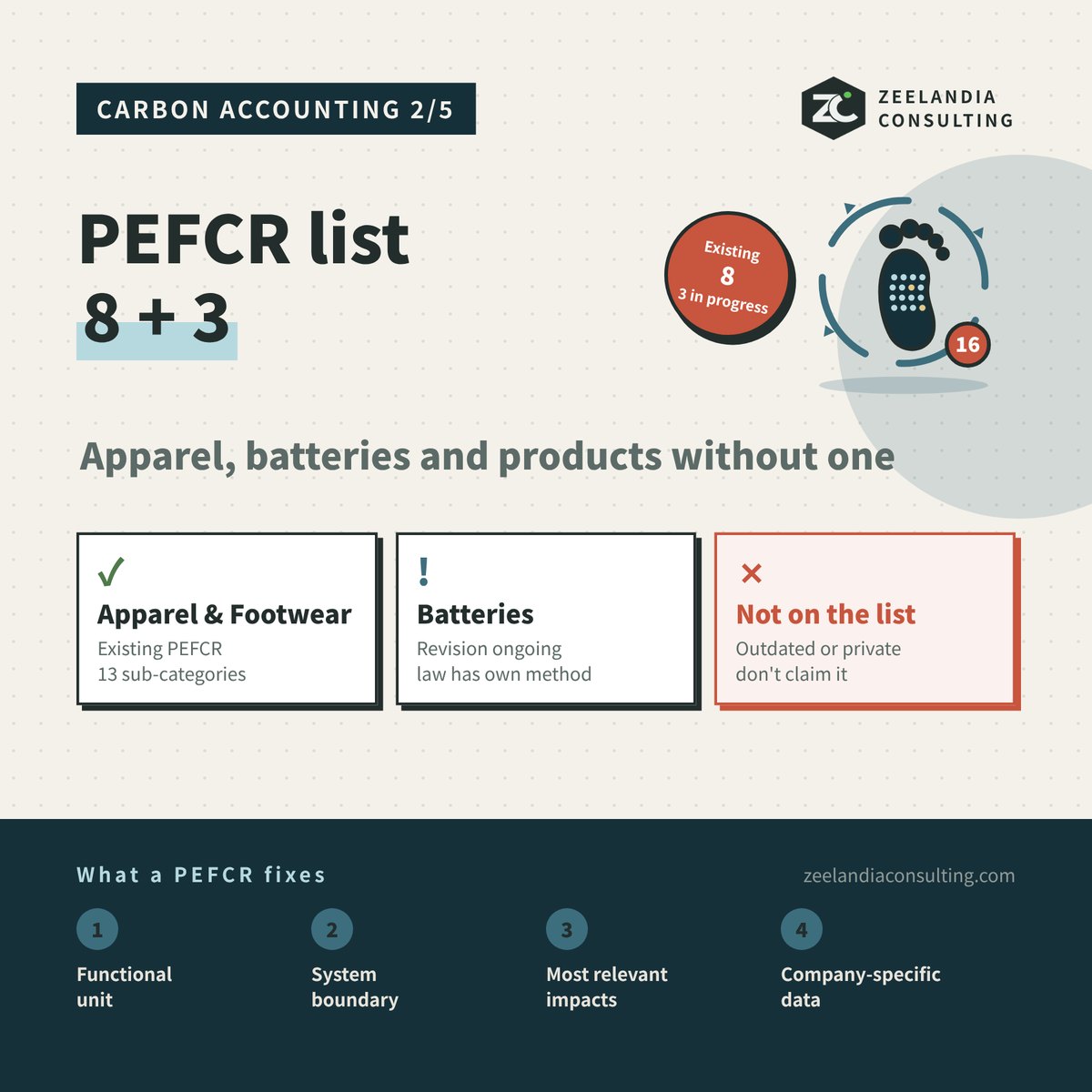
A PEFCR (Product Environmental Footprint Category Rules) is a set of calculation rules for one product group under the EU’s PEF method. It decides how a PEF study for that group must be done and whether results can be compared. As of November 2026, the Commission’s official list contains 8 existing PEFCRs and 3 being developed or revised. For manufacturers exporting to the EU, apparel and footwear and batteries are the most relevant.
Key points
- A PEFCR fixes the functional unit, system boundary, most relevant impact categories, processes that require company-specific data and default datasets. It is what makes PEF results comparable.
- The Commission’s official list: 8 existing (apparel and footwear, cut flowers and potted plants, synthetic turf, marine fish, beer, feed for food-producing animals, pet food, dairy products) and 3 in progress (space, hotel accommodation, batteries and accumulators).
- The Commission states plainly that PEFCRs not on the list are either outdated or private initiatives. Pilot-phase rules such as IT equipment and uninterruptible power supplies are no longer on the current list.
- Products without a PEFCR can still be assessed with the general PEF method, but every methodological choice must be explained and comparability is limited.
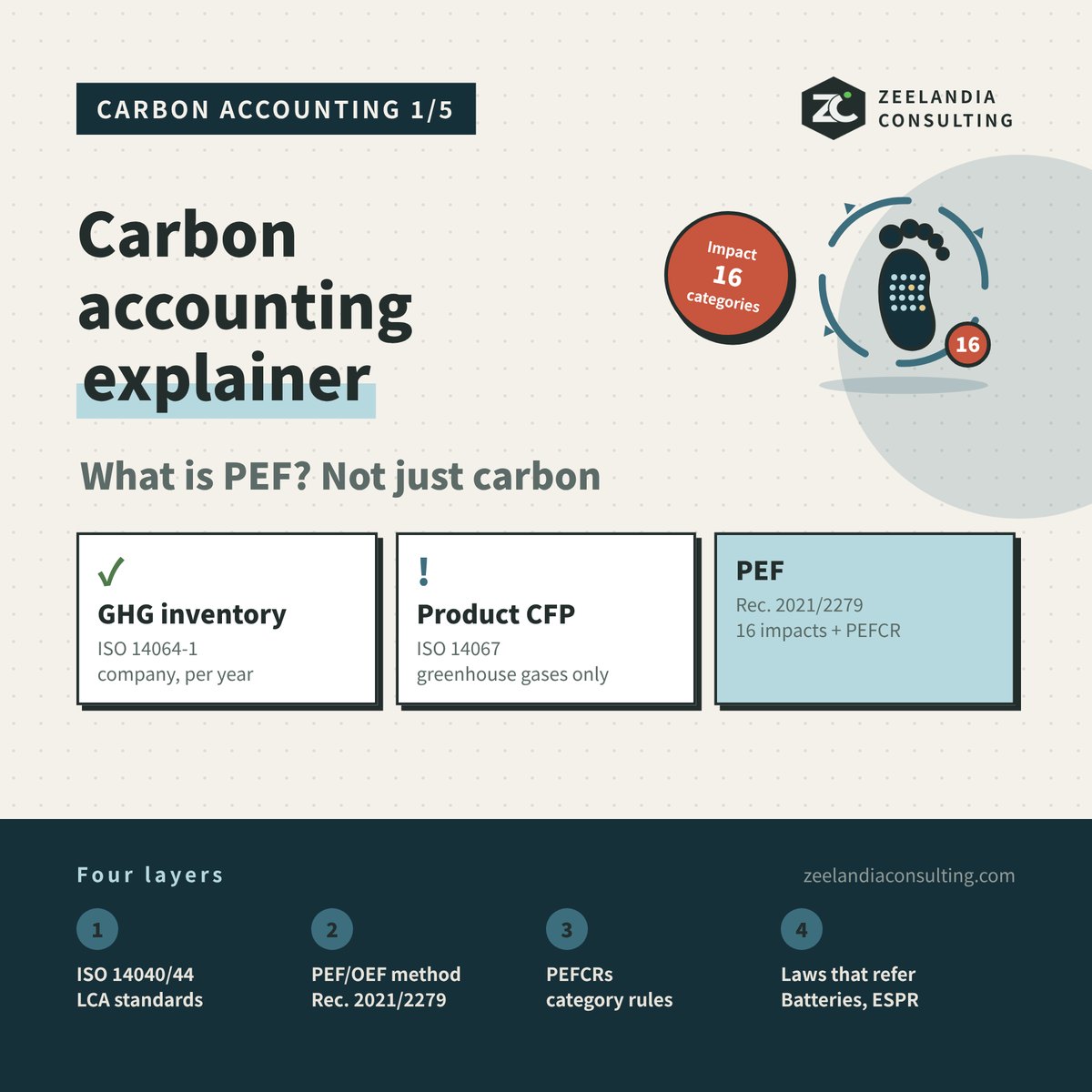
- PEFCRs are similar in concept to national carbon footprint product category rules, but cover 16 impacts instead of greenhouse gases only.
1. What does a PEFCR specify?
The PEF method (Annex I to Recommendation (EU) 2021/2279) is a general rulebook that leaves many choices to the practitioner. A PEFCR fixes those choices for one product group:
| What the PEFCR fixes | Why it matters |
|---|---|
| Functional unit and reference flow | For example “one T-shirt worn a set number of times” or “per kWh delivered”; comparisons need the same basis |
| System boundary | Which stages and processes from raw material to end of life are included |
| Most relevant impact categories and life cycle stages | Shows where the results really matter |
| Processes that must use company-specific data | Which figures must come from suppliers as actual values rather than defaults |
| Default secondary datasets | Which data everyone uses for the rest, so no one picks their own database |
| Representative product | A reference scenario for the product group |
Suppliers feel the fourth item most. When a brand runs a study under a PEFCR, processes listed as requiring company-specific data trigger requests upstream for actual figures, such as electricity or water use in dyeing and finishing, or material quantities.
2. Who writes a PEFCR?
According to the Commission, PEFCRs are drafted, managed and updated by a Technical Secretariat, usually made up of industry associations and companies. The process includes public consultations, a review by an independent panel of at least three members (for example LCA experts, industry and NGO representatives) and endorsement through the Commission and the Environmental Footprint Technical Advisory Board (EF TAB).
Two consequences follow: a PEFCR is an industry-led rulebook supported by the Commission, not a law; but only PEFCRs that went through this process are versions the Commission recognises.
3. The Commission’s official PEFCR list (November 2026)
Compiled from the Commission’s Green Forum page “Product Environmental Footprint method” (checked on 15 November 2026). The Commission describes the list as PEFCRs developed, or still being developed, with its support during the transition phase.
| Status | PEFCR | Relevance for manufacturers exporting to the EU |
|---|---|---|
| Existing | Apparel and Footwear | Technical textiles, garments, footwear and footwear components; 13 sub-categories, endorsed by the Commission in 2025 |
| Existing | Cut Flowers and Potted Plants | Horticulture exports |
| Existing | Synthetic Turf | Artificial turf and yarn |
| Existing | Marine Fish | Seafood |
| Existing | Beer | Food and beverage |
| Existing | Feed for Food-Producing Animals | Feed ingredients |
| Existing | Pet Food | Pet food contract manufacturing |
| Existing | Dairy Products | Food ingredients |
| In progress | Space | Space components; second consultation planned for 2027 |
| In progress | Hotel Accommodation | Services; second draft consultation ran until 2 June 2026 |
| In progress | Batteries and Accumulators | Cells, modules and battery materials |
The list changes as Technical Secretariats consult and the Commission endorses updates. Before citing a PEFCR, check the latest version and status on the official page.
Making apparel, footwear or batteries?
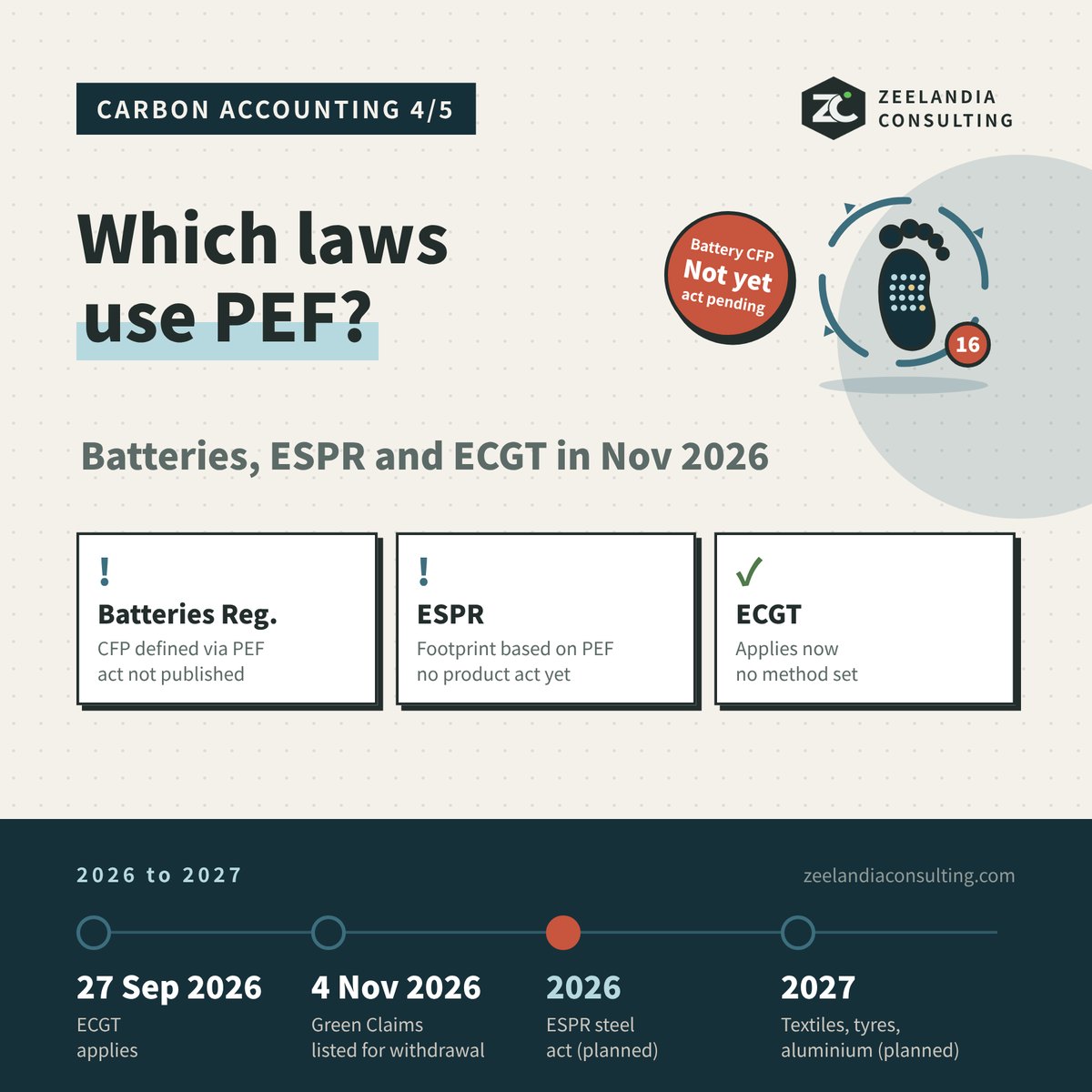
These are the two sectors where PEFCRs and EU law meet most closely: the apparel and footwear PEFCR is final and the ESPR textiles delegated act is scheduled for 2027, while batteries face the Article 7 carbon footprint requirements of the Batteries Regulation. Customer data requests will only get more detailed.
Book a 30-minute online consultation to see which rules your products fall under →
4. Can PEFCRs that are not on the list still be used?
On the same page, the Commission states: PEFCRs not included in the list are either outdated or private initiatives developed independently from the Commission.
This matters especially for electronics. The 2013 to 2018 pilot phase produced PEFCRs for IT equipment and uninterruptible power supplies (UPS), and the documents can still be found online, but they are not on the current list. If a customer or consultant relies on these older rules, the results can serve as an internal reference; claiming “PEFCR-compliant” externally calls for great care.
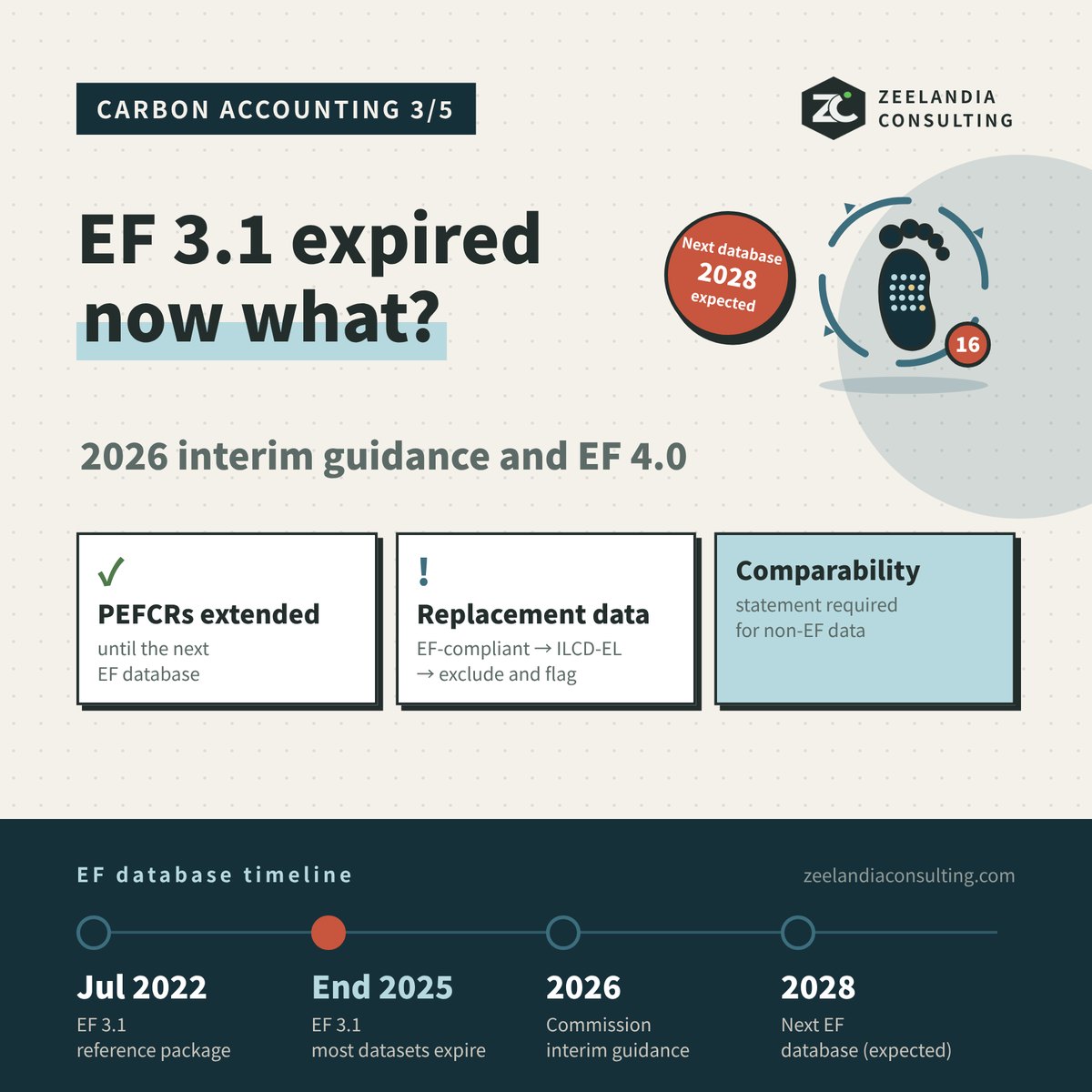
Another point that is often missed: after most EF 3.1 datasets expired at the end of 2025, the Commission’s 2026 interim guidance extended the validity of existing PEFCRs until the next EF database is in place (expected in 2028) and allows other datasets when EF-compliant ones are missing, with a comparability statement. Details in Part 3.
5. What if my product has no PEFCR?
First, two rules from the PEF method itself: where a PEFCR exists for the product, a PEF study shall be conducted in compliance with it; and comparisons and comparative assertions between products are allowed only for studies conducted in compliance with a PEFCR.
Most exported products have no PEFCR today. That does not mean PEF is impossible, but:
- the general PEF method (Annex I to the Recommendation) applies, and every methodological choice must be explained in the report;
- the results are useful for finding hotspots and tracking improvement in your own product, not for comparison with other companies’ products;
- if the product falls into an ESPR priority group, the future delegated act may set its own calculation method rather than follow a particular PEFCR.
The most common mistakes are describing a study “calculated with the PEF method” as “PEFCR-compliant”, or comparing results without a PEFCR against someone else’s.
No PEFCR for your product, but the customer wants PEF?
Results under the general method can be used, but their limits must be stated. First confirm what the customer will use them for, then decide how far to go, and check which other EU laws cover the product.
6. How does a PEFCR differ from a national carbon footprint PCR?
| Item | EU PEFCR | National carbon footprint PCR (e.g. Taiwan’s CFP-PCR) |
|---|---|---|
| Parent method | PEF method of Recommendation (EU) 2021/2279 | ISO 14067 and national rules |
| Scope | 16 environmental impacts | Greenhouse gases (carbon footprint) |
| Who writes it | Technical Secretariat drafts, Commission endorses | Companies or bodies draft, national authority approves |
| Validity | Per PEFCR; currently extended until the next EF database | Per document, for example 5 years after approval in Taiwan |
| Main use | Environmental information for European brands; methodological basis for future laws | Carbon labels, domestic procurement and disclosure |
Both are “how to calculate this product group” rulebooks, but their methods, databases and impact scope differ, and results cannot be converted from one to the other. Experience collecting data for a national carbon label helps; the figures themselves still need to be reworked under the PEFCR.
3 things to check now
- Is there an existing PEFCR for your main export products? Or only a pilot-phase version or a private rulebook?
- Which version of the PEFCR does your customer refer to? Do the document number, version and status match the Commission’s official page?
- Which of your processes are most likely to require company-specific data? Are you recording those figures today?
Common misconceptions
MythAny PEFCR you can find online is an official version.
FactOn its PEF method page the Commission states that PEFCRs not on the official list are either outdated or private initiatives.
MythThe battery PEFCR is the carbon footprint methodology of the Batteries Regulation.
FactRecital 27 of the Batteries Regulation refers to the PEFCR for high specific energy rechargeable batteries for mobile applications, and the Commission's Joint Research Centre developed carbon footprint rules for EV batteries and others on the basis of the EF method and that PEFCR. What has legal force is the Article 7 methodology delegated act, which had still not been published in the Official Journal as of November 2026.
FAQ
How does the apparel and footwear PEFCR affect textile and footwear suppliers?
The PEFCR itself is voluntary, but European brands that calculate product environmental footprints under it will ask fabric, dyeing, footwear and component suppliers for actual data. France’s voluntary textile “environmental cost” labelling, in place since October 2025, is also based on PEF. With the ESPR textiles delegated act scheduled for 2027, these requests will only increase.
Can we write our own PEFCR?
A PEFCR has to go through a Technical Secretariat, public consultations, an independent review and Commission endorsement. Companies can join a Technical Secretariat, or use the general PEF method when there is no PEFCR, but a self-written rulebook will not become a Commission-endorsed PEFCR.
Are results under old pilot-phase PEFCRs still usable?
They can serve as a reference for internal improvement. In external communication, state clearly which rulebook and version you used, so it is not mistaken for a PEFCR currently endorsed by the Commission.
Next in the series
Part 3: After EF 3.1 expired, can PEF studies still be done? The 2026 interim guidance and EF 4.0
Need help?
ZC can help you confirm which PEFCR or product category rules apply to your products and what kind of data your customer is asking for, with support on ISO 14067 product carbon footprints and ESPR and other EU regulations.
- Book a 30-minute online consultation: pick a time
- Follow ZC on LINE: lin.ee/QKV5RTE
Legal sources and references
- European Commission, Green Forum, Product Environmental Footprint method (PEFCR list): green-forum.ec.europa.eu
- Commission Recommendation (EU) 2021/2279, Annexes I and II: EUR-Lex
- Regulation (EU) 2023/1542, recital 27 and Article 7: EUR-Lex
- European Commission, DG MOVE, second draft PEFCR for hotel accommodation (20 April 2026): transport.ec.europa.eu
- European Commission, PEFCR for the space sector: defence-industry-space.ec.europa.eu
This article provides general information, updated to 15 November 2026, and does not constitute legal advice. The PEFCR list and versions change; check the Commission’s official page before relying on a PEFCR.
Next step: have you considered these three options?
Sources · European Commission, Green Forum: Product Environmental Footprint method (PEFCR list) · Commission Recommendation (EU) 2021/2279, Annex II (PEFCR requirements) · European Commission, DG MOVE: consultation on the second draft PEFCR for hotel accommodation services (20 April 2026) · European Commission, PEFCR for the space sector · EURATEX, PEFCR for Apparel and Footwear one-pager (June 2025). This article is general information and not legal advice for any specific case. Obligations are defined by the Official Journal of the EU.
PEFCRPEFProduct Environmental Footprintproduct category rulesapparel and footwear PEFCRbattery PEFCREU carbon accounting