
In this article (10 sections)
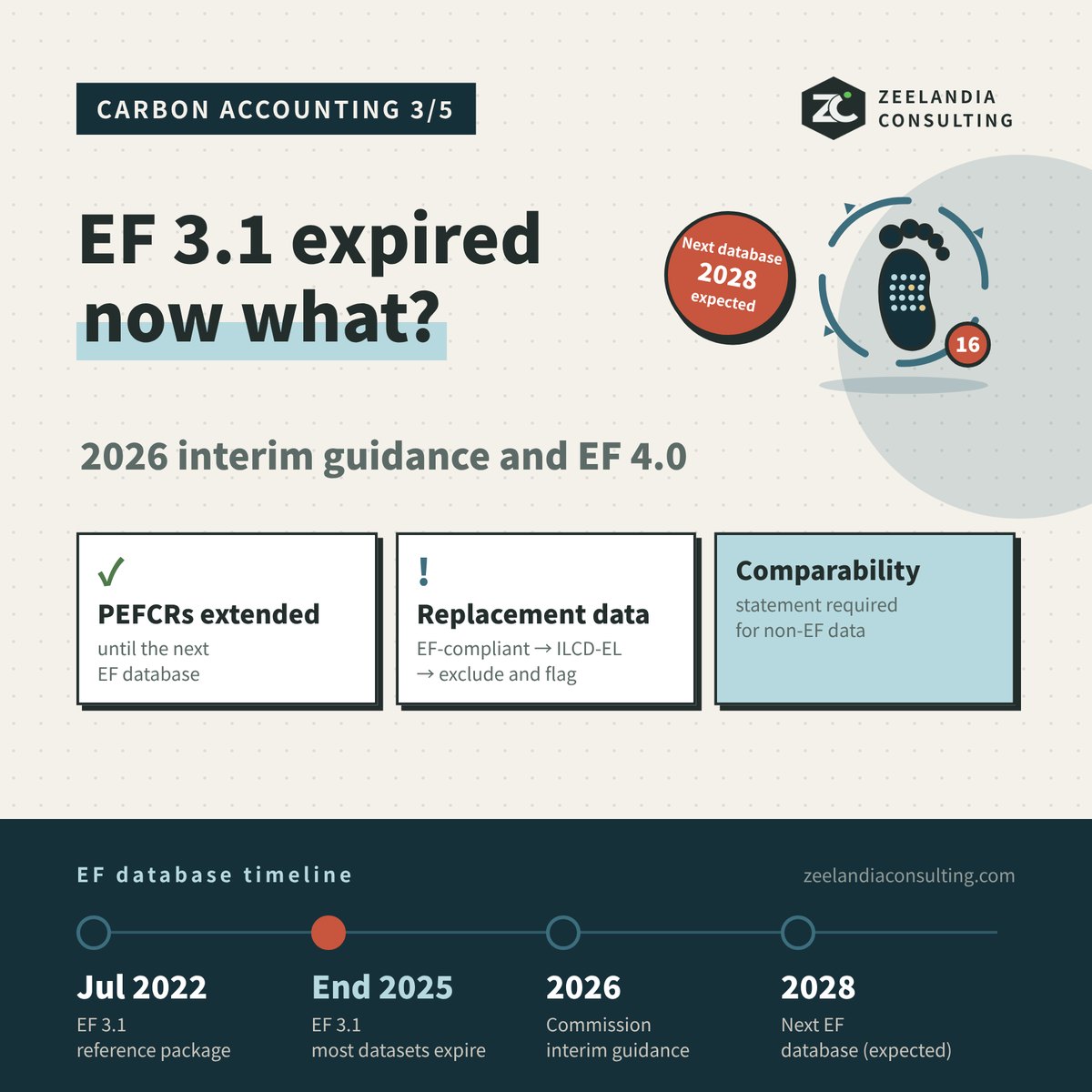
Most of the EF 3.1 datasets that EU Product Environmental Footprint (PEF) studies rely on expired at the end of 2025. In April 2026 the Commission issued interim guidance: existing PEFCRs remain valid until the next EF database is in place (expected in 2028), and where EF-compliant datasets are missing, other datasets may be used in a set order, provided the report explains that comparability is affected. PEF studies can still be done; the figures produced now simply need to state clearly under which conditions they were calculated.
Key points
- The EF 3.1 datasets expired because the Commission’s procurement contracts with data providers ended, not because of a flaw in the method.
- The Commission’s 2026 guidance keeps the Recommendation’s order: EF-compliant datasets still available first, then ILCD Entry Level (ILCD-EL) datasets; if neither exists, the process is excluded and flagged in the report, but relaxes the cap on non-EF-compliant data.
- The validity of existing PEFCRs is extended until the next EF database is in place, currently expected in 2028.
- Studies using non-EF-compliant datasets must include a comparability statement; results from different databases should not be compared directly.
- The EF 4.0 impact assessment method is expected to grow to 18 categories, adding biodiversity loss from land use and microplastics.
1. Why does PEF need “EF-compliant datasets”?
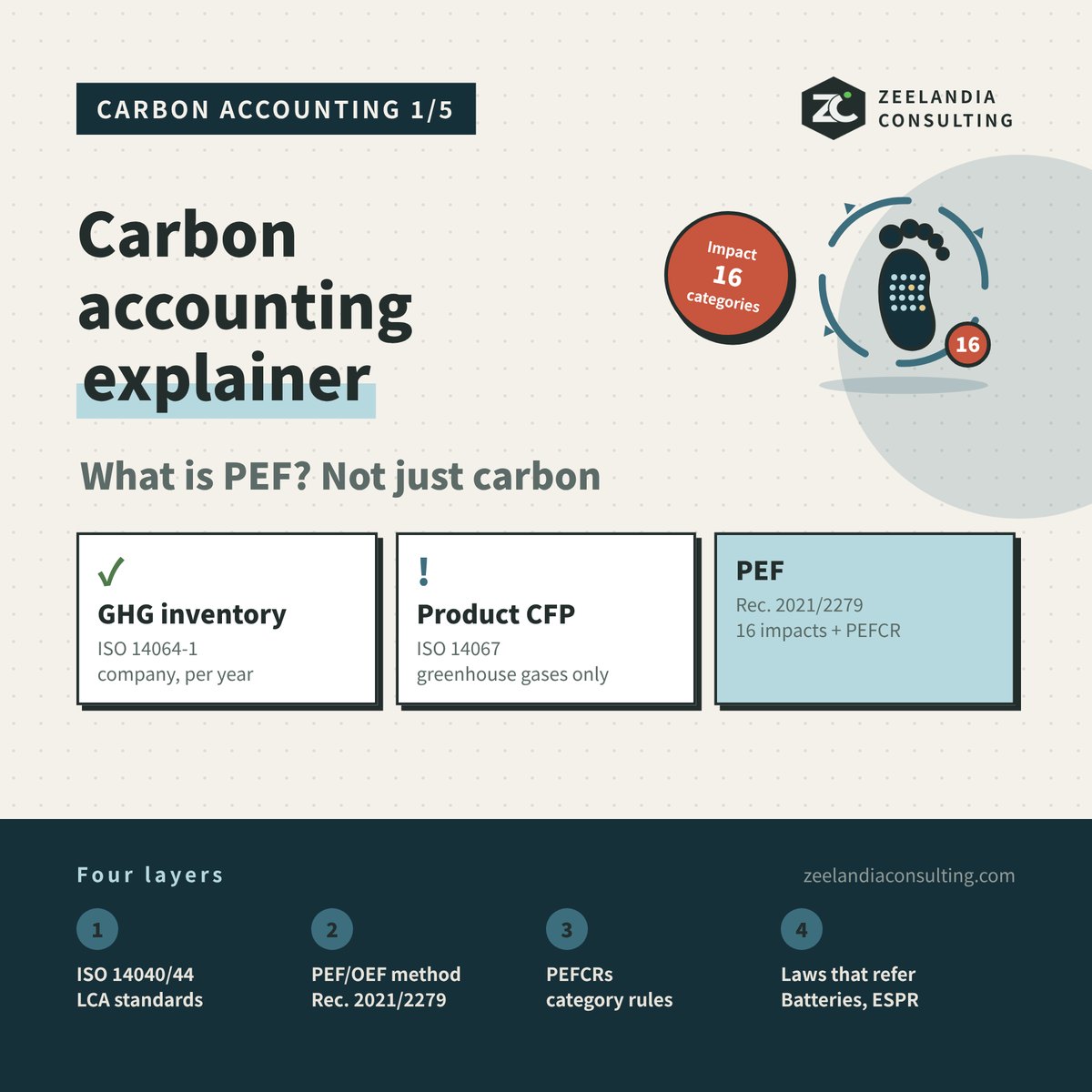
PEF aims to make results comparable. So the PEF method (Annex I to Recommendation (EU) 2021/2279) prescribes not only how to calculate but also which data to use: new datasets created in a study must be EF compliant, secondary data should in principle come from EF-compliant datasets, and the share of non-EF-compliant data is limited.
If each company picked different electricity, steel or cotton data from different commercial databases, results under the same PEFCR would still differ widely because of the database alone. EF-compliant datasets exist to prevent that.
2. What happened to EF 3.1?
EF 3.1 has two parts:
| Part | Content | Status |
|---|---|---|
| Reference package (impact assessment method) | Updated in July 2022, revising characterisation factors for six impact categories, with climate change aligned to the IPCC Sixth Assessment Report | Still the current method |
| EF 3.1 datasets | Life cycle data procured by the Commission from several data providers for PEF studies and PEFCRs | Most valid until the end of 2025 |
Most datasets were supplied under public procurement contracts and are no longer provided once those contracts ended. The Commission had already discussed options for after expiry at Environmental Footprint Technical Advisory Board meetings in 2025: keeping PEFCRs while allowing commercial datasets, letting Technical Secretariats or users choose replacements, and waiving the cap on non-EF-compliant data.
3. What does the 2026 interim guidance say?
On 30 April 2026 the Commission’s Directorate-General for Environment published the “Guidance on the implementation of Commission Recommendation (EU) 2021/2279 in the context of lower availability of EF compliant datasets”. The order of datasets was already in the Recommendation; what the guidance adds is how to relax it while data are scarce:
| Situation | Order of datasets |
|---|---|
| Studies under a PEFCR or OEFSR | 1. EF-compliant datasets still available; 2. ILCD Entry Level datasets selected by the Technical Secretariat to replace the missing ones; 3. where the Technical Secretariat has not selected any, datasets chosen by the user, preferably from a single database, explained in the report and checked by the verifier |
| Studies without a PEFCR | 1. EF-compliant datasets; 2. ILCD Entry Level datasets, preferably from a single database; 3. if none exist, the process is excluded and flagged in the report |
Three further points matter just as much:
- PEFCR validity extended: existing PEFCRs and OEFSRs remain valid until the next EF database is in place, currently expected in 2028.
- Comparability statement: studies are exceptionally still considered EF compliant even where non-EF-compliant datasets exceed the usual 10% of the single overall score, but the report must state that non-EF-compliant datasets were used, which may hinder comparability of results.
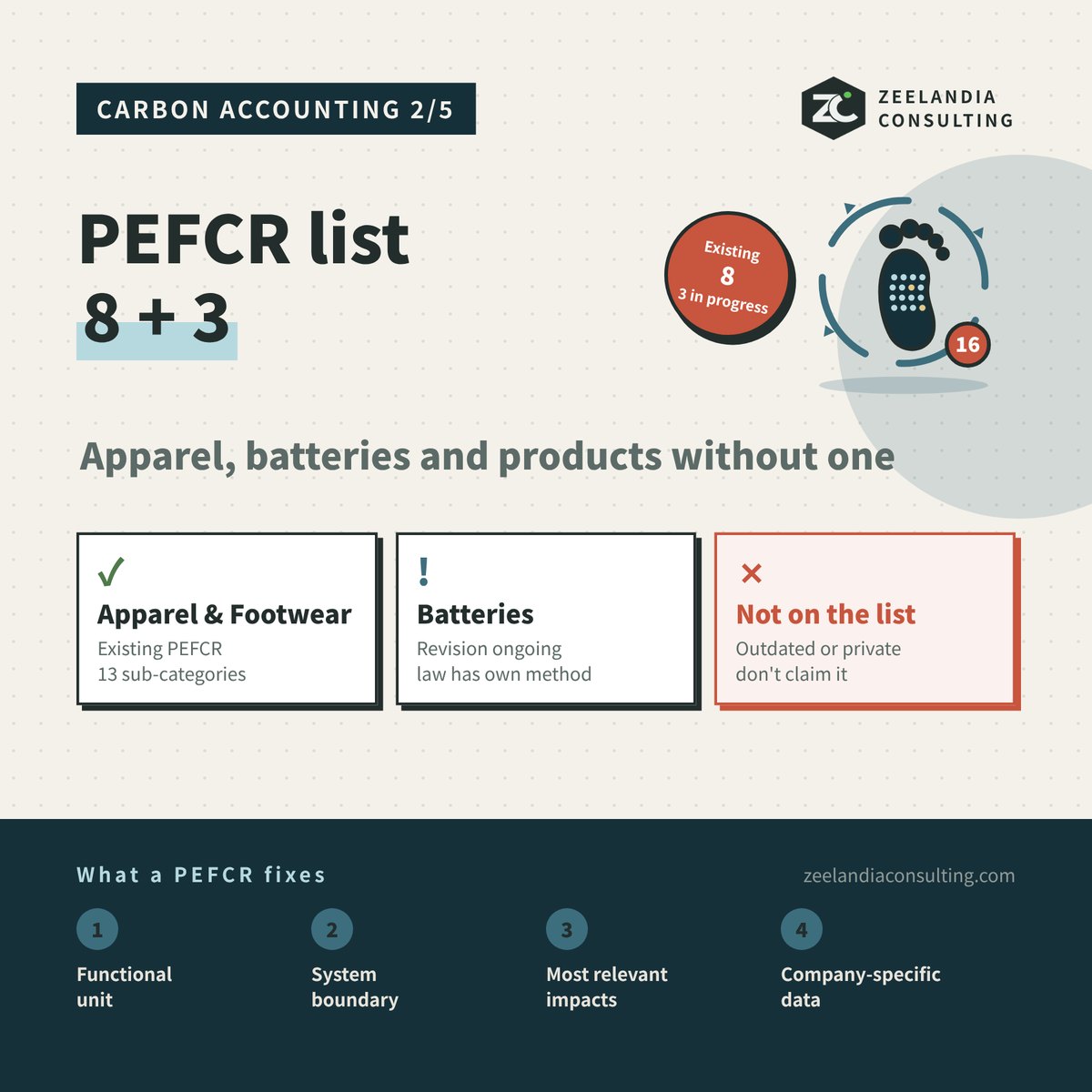
- PEFCRs may annex a dataset list: replacement datasets selected by a Technical Secretariat should be published in an annex or corrigendum to the PEFCR, so that studies in the same sector use the same data. The apparel and footwear Technical Secretariat is already working on this.
The guidance does not name any commercial database.
Does your customer's data request specify a database?
During the interim period, results under the same PEFCR may come from different databases. If the customer's request names a database or version, your answer has to match it; if it does not, it is safer to ask first.
Book a 30-minute online consultation to review the customer's request together →
4. What will EF 4.0 change?
According to an abstract the Commission’s Joint Research Centre presented at SETAC Europe 2026, the EF 4.0 impact assessment method is expected to:
- grow from 16 to 18 categories, adding “biodiversity loss due to land use” and “environmental impacts of microplastic emissions”;
- update models and characterisation factors for existing categories, with sub-regional differences for some (such as water use);
- adjust normalisation and weighting factors.
On data, the next EF database is currently expected in 2028. The Commission’s Green Forum website also says a new EF methods Recommendation is expected in 2026; as of our check, it had not been published. Once the new method and database are in place, PEFCRs are expected to be revised as well.
5. What does this mean for suppliers outside the EU?
- The numbers will change: the same product calculated with EF 3.1, with interim replacement datasets and later with EF 4.0 may give different results. Nobody made a mistake; the method and data are changing versions.
- Customer data requests will get more specific: to keep results comparable, brands may specify the database, the version or the dataset list in a PEFCR annex.
- Records matter more than the number: if you can explain which rulebook, data version and boundary a figure is based on, you will not have to redo everything when versions change.
The most common mistakes are comparing figures calculated at different times with different databases, or switching to another database without being asked and without saying so.
Around 2028, figures may need recalculating
Once the new database and method are in place, customers are likely to ask for updates. How quickly you can recalculate depends on whether you keep the raw data, versions and boundaries today.
The next EF database is currently expected in 2028.
Let ZC act as your outsourced EU regulatory function and track method and data changes →
3 things to check now
- Which data version do your current PEF or carbon footprint results use? EF 3.1, a commercial database or national factors?
- Does the customer’s request specify a PEFCR version, database or dataset list?
- Will your main customers ask for a recalculation around 2028? Are you keeping the raw data needed to recalculate?
Common misconceptions
MythWith EF 3.1 expired, all PEF studies and PEFCRs are invalid.
FactThe Commission's 2026 interim guidance extends the validity of existing PEFCRs until the next EF database is in place (expected in 2028) and relaxes the rules on replacement datasets. Studies can continue, but a comparability statement is required where non-EF-compliant datasets are used.
MythDuring the interim period, any database will do.
FactThe order still applies: EF-compliant datasets first, then ILCD Entry Level datasets; under a PEFCR, datasets selected by the Technical Secretariat come first, and where users choose their own they should come from a single database where possible and be checked by the verifier.
FAQ
How do EF-compliant datasets differ from a general LCA database?
EF-compliant datasets are built to the Commission’s EF data specifications, with consistent nomenclature, modelling rules, data quality rating and format, so they can be used directly in PEF studies. Data from a general LCA database do not necessarily meet these specifications and count as non-EF-compliant data in a PEF study.
What is ILCD Entry Level (ILCD-EL)?
ILCD is the data format and set of rules of the Commission’s International Reference Life Cycle Data System. Entry Level is its more basic tier: datasets meet basic format and documentation requirements but not necessarily the modelling and quality specifications of EF compliance.
Should we wait for the new database before starting?
It depends on the purpose. Figures that customers or laws need now cannot wait. Internal improvement or hotspot analysis can start now, keeping the raw data so results can be updated when the new database arrives.
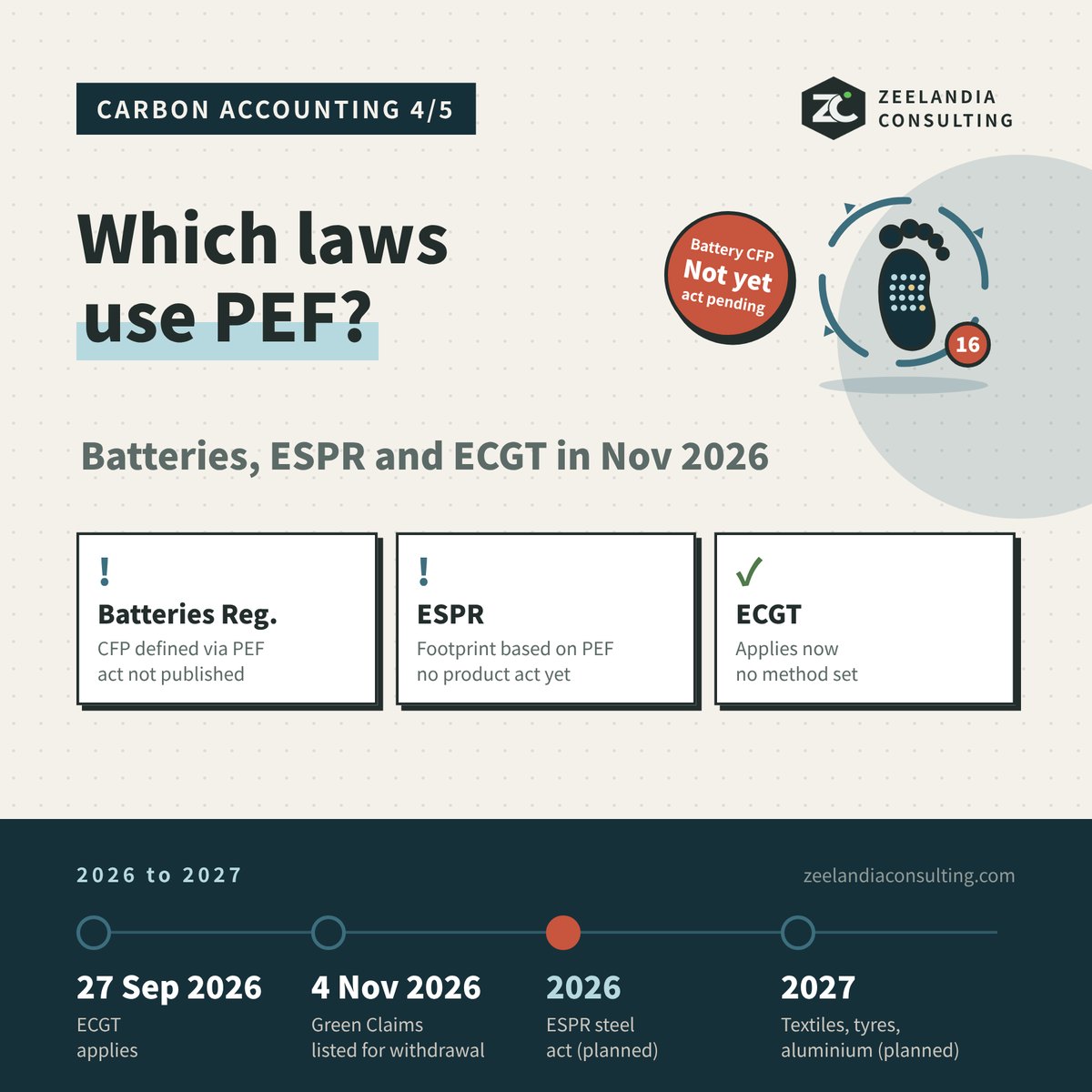
Does this change affect battery carbon footprint declarations?
The calculation method for battery carbon footprint declarations under Article 7 of the Batteries Regulation is set by a delegated act, which had still not been published in the Official Journal as of November 2026. Which data rules the final act uses will be decided by the published version.
Next in the series
Need help?
ZC can help you interpret customer requests for PEF or carbon footprint data, check that methods and data versions match, and support ISO 14067 product carbon footprints.
- Book a 30-minute online consultation: pick a time
- Follow ZC on LINE: lin.ee/QKV5RTE
Legal sources and references
- European Commission, DG ENV, Guidance on the implementation of Commission Recommendation (EU) 2021/2279 in the context of lower availability of EF compliant datasets, 1st edition (2026): Publications Office
- Commission Recommendation (EU) 2021/2279, Annex I: EUR-Lex
- European Commission, JRC, Environmental Footprint transition phase: Knowledge4Policy
- European Commission, JRC, Updated characterisation and normalisation factors for the EF 3.1 method: JRC Publications
- SETAC Europe 2026, EF 4.0 impact assessment updates (abstract): SETAC
This article provides general information, updated to 15 November 2026, and does not constitute legal advice. The EF database and method are still being updated; check the Commission’s latest documents before relying on them.
Next step: have you considered these three options?
Sources · European Commission, Guidance on the implementation of Commission Recommendation (EU) 2021/2279 in the context of lower availability of EF compliant datasets (1st edition, 2026) · European Commission, JRC: Environmental Footprint transition phase (EF 3.1 reference package) · European Commission, JRC: Updated characterisation and normalisation factors for the EF 3.1 method (JRC130796) · European Commission, Green Forum: About the Environmental Footprint methods · Commission Recommendation (EU) 2021/2279 · SETAC Europe 2026, The Environmental Footprint LCIA method: updates for the EF 4.0 version (abstract). This article is general information and not legal advice for any specific case. Obligations are defined by the Official Journal of the EU.
EF 3.1EF 4.0PEFPEFCREF-compliant datasetsILCDProduct Environmental Footprintlife cycle assessment