The EU Forced Labour Regulation (FLR, Regulation (EU) 2024/3015) applies in full from 14 December 2027 and prohibits placing or making available on the EU market, or exporting, any product made with forced labour. From that date, any product made with forced labour at any stage of its supply chain can no longer be sold in the EU or exported from it. The Commission adopted its application guidelines in June 2026. Here is the big picture.
Key takeaways
- The FLR entered into force on 13 December 2024 and applies in full from 14 December 2027.
- Article 3 sets an “unconditional and absolute” prohibition with an obligation of result, and there is no minimum share of forced labour (Article 2(7)).
- Every product, sector and origin and every economic operator is covered, including online sales targeted at EU end users (Article 4); services are not.
- Products made available from 14 December 2027 are covered even if produced or imported earlier.
- Member States must notify penalty rules by 14 December 2026; under Article 17(5), no investigation may be opened where due diligence has eliminated the concern.
What does the FLR prohibit?
Article 3 of the FLR provides that economic operators shall not place or make available on the Union market products made with forced labour, nor export them. The Commission calls this an “unconditional and absolute” prohibition that imposes an obligation of result. The question is not how hard you tried, but whether the product is clean.
Who is covered by the FLR?
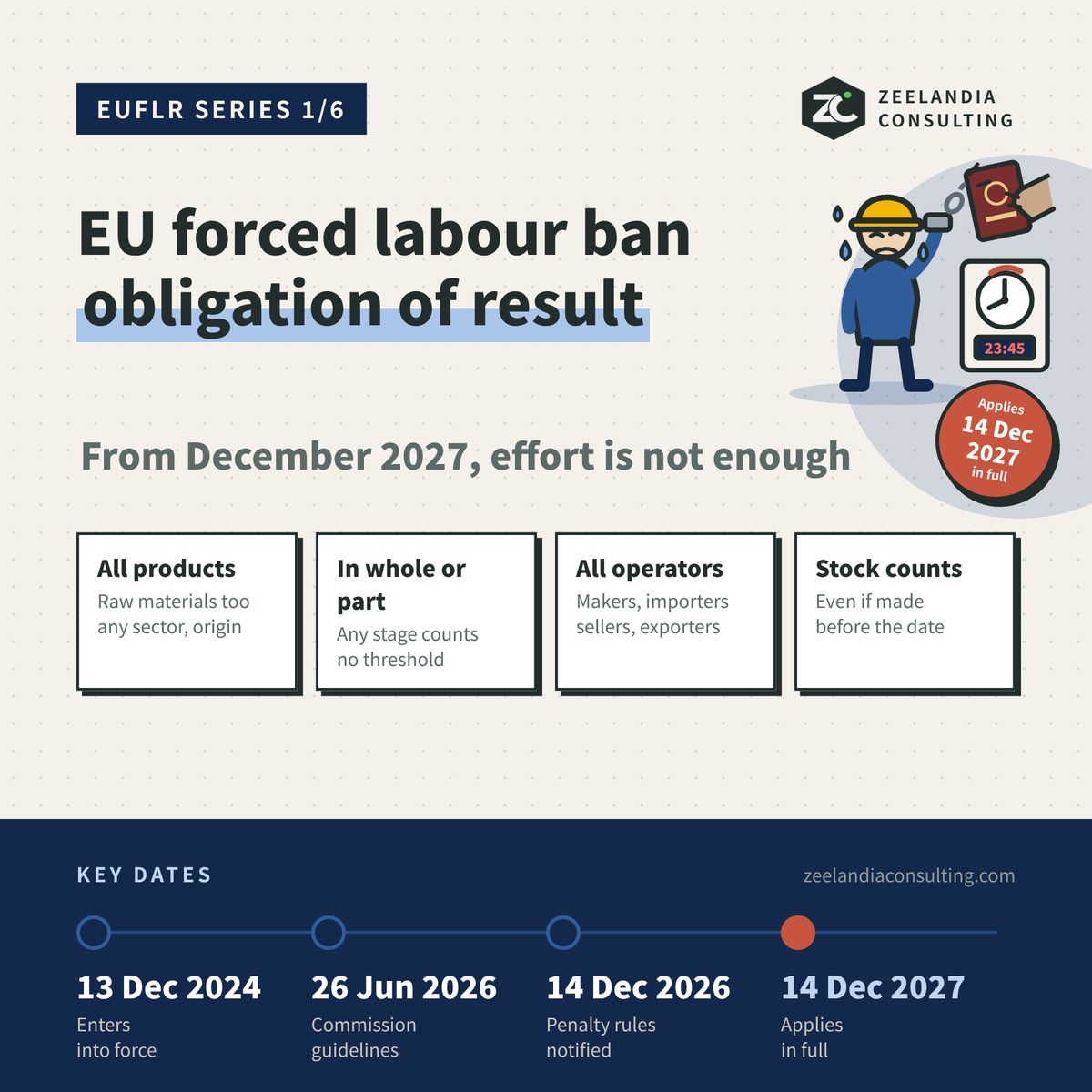
The FLR applies across products, sectors, origins and economic operators:
- Every product, sector and origin, including agricultural products, minerals and raw materials, and even defence products.
- “In whole or in part”: forced labour at any stage of extraction, harvesting, production, manufacturing or processing brings the product into scope. There is no minimum share (Article 2(7)).
- Every economic operator: manufacturers, importers, distributors, retailers and exporters (Article 2(9)).
- Online sales targeted at EU end users (Article 4).
- Not services such as transport, warehousing and logistics.
Companies outside the EU are not off the hook. Where forced labour occurs outside the EU, the Commission leads the investigation, and the guidelines say importers are likely to be a key focus. The Commission may also request information directly from “other product suppliers” further up the chain (Article 17(1)).
What are the key FLR dates?
The FLR timeline runs from entry into force on 13 December 2024 to full application on 14 December 2027 and a first Commission evaluation in 2029.
| Date | Milestone |
|---|---|
| 13 December 2024 | FLR enters into force |
| 14 December 2025 | Deadline for Member States to notify competent authorities |
| 24 April 2026 | Implementing Regulation (EU) 2026/903 sets up the forced labour module of the information and communication system for market surveillance (ICSMS) |
| 26 June 2026 | Commission adopts application guidelines; Forced Labour Single Portal launched |
| 14 December 2026 | Deadline for Member States to notify penalty rules |
| 14 December 2027 | FLR applies in full |
| 14 December 2029 | First Commission evaluation |
The forced labour risk database, legally due by 14 June 2026, is not yet online, and some Member States, including the Netherlands, have yet to designate their authority. The supporting tools are late. The application date is not.
Does stock already in the warehouse count?
The FLR applies to all products made available from 14 December 2027, even if they or their components were produced or imported before that date. Only products already sold to end users are excluded. For long-lead sectors, orders placed this year will shape what sits on shelves in 2028.
What does an obligation of result mean in practice?
Article 1(3) of the FLR states that the regulation creates no new due diligence obligations. That sounds lenient. It is not:
- There is no due diligence safe harbour. If forced labour is found, the product is banned.
- There is no size threshold, although authorities will weigh an operator’s size and resources.
- A ban has general application: once a product is banned, no operator may sell it.
Due diligence still matters because it is your strongest evidence. Under Article 17(5), no investigation may be opened where due diligence has eliminated the concern.
The ZC view
For Asian suppliers, the FLR will arrive first as customer requests: supply chain maps, recruitment fee records, raw material traceability. Building these once, on a single due diligence backbone based on the Organisation for Economic Co-operation and Development (OECD) framework that also serves the Battery Regulation and customers’ Corporate Sustainability Due Diligence Directive (CSDDD) requirements, is how suppliers earn “trusted supplier” status ahead of competitors.
FAQ
When does the EU Forced Labour Regulation apply?
The FLR entered into force on 13 December 2024 and applies in full from 14 December 2027. It covers all products made available from that date, even if they or their components were produced or imported earlier.
Does the FLR apply to companies outside the EU?
Companies outside the EU are not off the hook. Where forced labour occurs outside the EU, the Commission leads the investigation, importers are likely to be a key focus, and the Commission may request information directly from other product suppliers further up the chain (Article 17(1)).
Does the FLR require companies to carry out due diligence?
Article 1(3) states that the FLR creates no new due diligence obligations, and there is no due diligence safe harbour. Due diligence still matters as your strongest evidence: under Article 17(5), no investigation may be opened where due diligence has eliminated the concern.
Is there a minimum share of forced labour or a company size threshold?
No. Forced labour at any stage brings the product into scope, with no minimum share (Article 2(7)). There is no size threshold either, although authorities will weigh an operator’s size and resources.
Does the FLR cover services?
No. The FLR covers products, not services such as transport, warehousing and logistics.
Next: What counts as forced labour? The ILO indicators Taiwanese suppliers should know
The series
- The EU Forced Labour Regulation explained: what changes on 14 December 2027
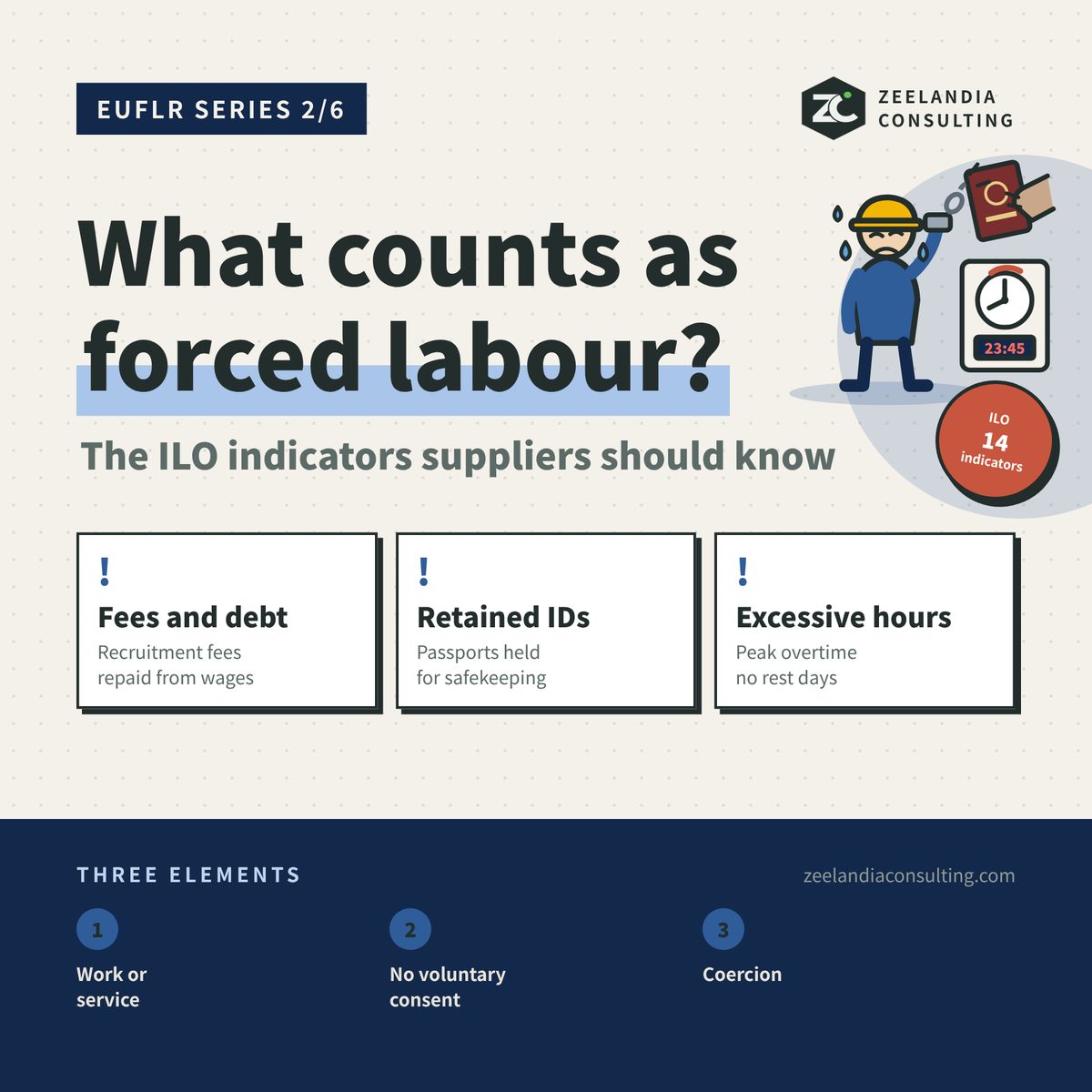
- What counts as forced labour? The ILO indicators Taiwanese suppliers should know
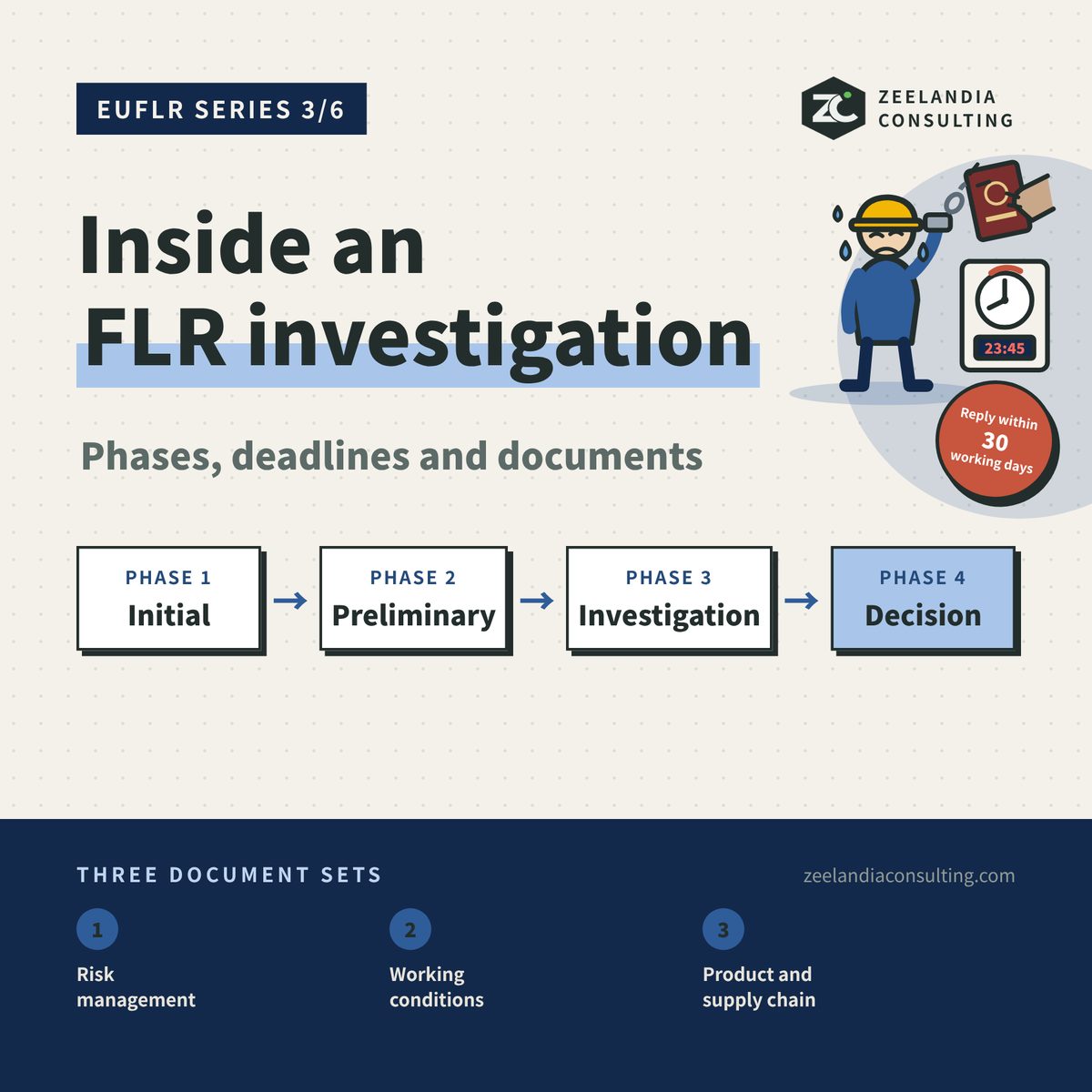
- Inside an FLR investigation: phases, deadlines and the documents you need
- After a ban: withdrawal, disposal, customs holds and penalties
- Forced labour due diligence with the OECD six-step framework
- The FLR action checklist for suppliers: now to December 2027
The Commission’s guidance runs to 74 pages. We have marked up what matters for you. Book a free 30-minute call or follow updates on ZC EU Regulations.
Sources · Regulation (EU) 2024/3015 (Forced Labour Regulation) · RVO: Forced Labour Regulation. This article is general information and not legal advice for any specific case. Obligations are defined by the Official Journal of the EU.
FLREU Forced Labour Regulation2024/3015forced labour banforced labour productsobligation of result