
In this article (9 sections)
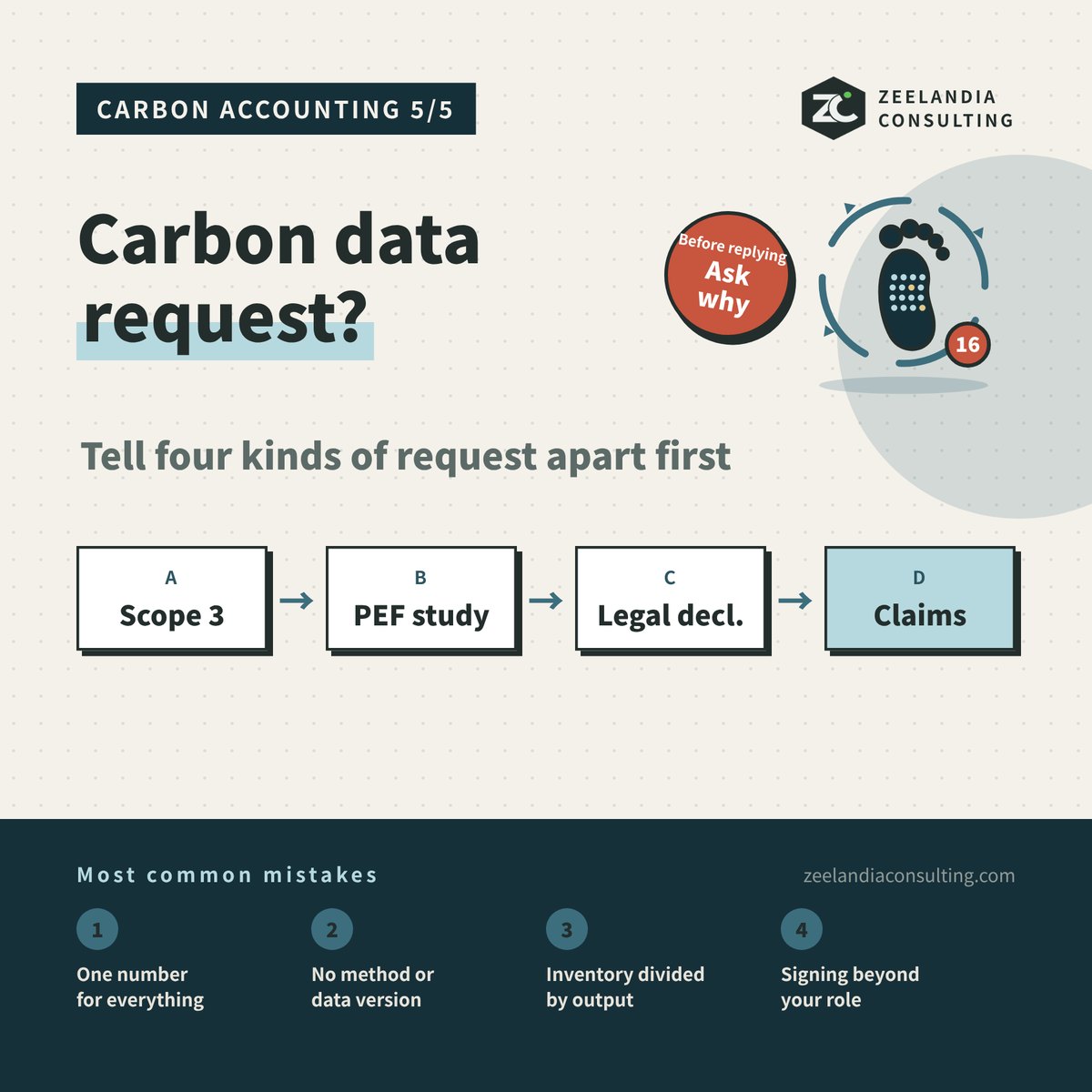
An email from a European customer asking for a “carbon footprint” or “PEF” data can hide four quite different requests: the customer’s own Scope 3 accounting, a PEF study under a PEFCR, a carbon footprint declaration required by a law such as the Batteries Regulation, or evidence for a brand’s environmental claim to consumers. Methods, responsibilities and the consequences of getting it wrong all differ. Working out which one it is matters more than rushing to send a number.
Key points
- Four kinds of request: Scope 3 accounting, a PEF study, a legal declaration and evidence for a marketing claim. One email may mix several.
- The clues are in the wording: PEFCR, 16 impact categories or EF datasets point to PEF; Regulation 2023/1542 Article 7 points to batteries; Scope 3 usually points to the customer’s own accounting.
- The most common mistakes: one number for every question, no method or data version stated, and dividing a corporate inventory by output to get a product footprint.
- Legal declarations and consumer claims carry legal consequences if wrong. Before signing or providing data, know which role you are in.
1. How do the four requests differ?
| Request | What the customer uses it for | Common basis | What it means for the supplier |
|---|---|---|---|
| A. Scope 3 accounting | Calculating the customer’s own Scope 3 emissions, for example for CSRD/ESRS E1 disclosure or reduction targets | GHG Protocol, ISO 14067 | Usually a product carbon footprint or emission factor; method and boundary must be stated |
| B. PEF study | Calculating a product environmental footprint under a PEFCR, for product development, comparison or labelling | Recommendation (EU) 2021/2279 and the relevant PEFCR | Actual data for processes listed as requiring company-specific data |
| C. Legal declaration | Meeting product law obligations, such as the battery carbon footprint declaration, possibly ESPR delegated acts in future | Batteries Regulation Article 7 and its delegated act | Data go into technical documentation and notified body assessment and must be traceable |
| D. Claim evidence | Substantiating a brand’s environmental claims to consumers | ECGT and national transposing laws | If the data are wrong, the customer comes back to you when facing the authorities |
A and B are mostly voluntary business requests, C is a legal obligation, and D sits in between: the claim is voluntary, but once made it must comply with the law.
2. How can you tell which one it is?
You do not need to calculate anything first. The wording of the request usually tells you most of it:
| Words in the request | Most likely |
|---|---|
| Scope 3, Category 1 purchased goods, PCF, emission factor | A. Scope 3 accounting |
| PEFCR, EF 3.1, EF-compliant dataset, 16 impact categories, single score, company-specific data | B. PEF study |
| Regulation (EU) 2023/1542, Article 7, kg CO₂e per kWh, battery model per manufacturing plant | C. Batteries Regulation declaration |
| ESPR, delegated act, Digital Product Passport | C. Future ESPR requirements (no product delegated act yet) |
| marketing, label, claim, consumer, on-pack | D. Claim evidence |
If one questionnaire contains several of these, the customer’s sustainability, product development, compliance and marketing teams have probably merged their requests. Answering them separately is safer than using one number for all of them.
Can't tell which kind of request it is?
Asking the customer what the data are for is the simplest route. Different purposes need different methods, data versions and scopes of responsibility.
Bring the customer's email or questionnaire and book a 30-minute online consultation →
3. The mistakes suppliers make most
- One number for every question: the same “X kg CO₂e per piece” goes into the Scope 3 questionnaire, the PEF data sheet and marketing. Methods and boundaries differ, so the numbers should not be the same.
- No method, boundary or data version: a bare number leaves the customer unable to judge whether it can be used, and leaves you unable to explain it later when versions change or someone checks.
- Dividing a corporate inventory by output: a corporate inventory covers a company or site; a product footprint depends on the life cycle and allocation rules. One cannot simply be converted into the other.
- Defaults presented as actual values: entering database defaults for processes where the PEFCR requires company-specific data, without flagging them, makes the customer’s study non-compliant with the PEFCR.
- Signing declarations beyond your role: for example signing, as a supplier, a legal declaration that the manufacturer must issue, or committing to values to be reached in a future year.
- Assuming portable batteries need a Batteries Regulation carbon footprint: Article 7 currently covers only EV, LMT and rechargeable industrial batteries above 2 kWh. Customer requests about portable batteries are usually type A.
Before replying, have someone who knows the methods take a look
Most of these six mistakes are discovered only after the figure has been sent, by which time the customer may have put it into a report or a label. ISO 14067 inventory and evidence can be organised before you reply.
4. Which data need extra care?
- Data that go into technical documentation or notified body assessment (type C): they must be traceable to sources and calculations, and must be recalculated when the bill of materials or energy mix changes (Batteries Regulation, Article 7(1)).
- Data that end up in front of consumers (type D): ECGT bans generic claims and offset-based product carbon neutrality claims, and the evidence for a claim is often supplier data.
- Data tied to contract clauses: some customers require warranties of data accuracy or indemnities in purchase contracts; check the scope of those clauses before providing data.
3 things to check now
- What is this request for? Customer accounting, a PEF study, a legal declaration or a marketing claim?
- Has the customer specified a method, rulebook version or database? For example a particular PEFCR, EF 3.1 or a specific factor source.
- What is your role here? A supplier providing data, or the party issuing a declaration and carrying legal responsibility for it?
Common misconceptions
MythA customer asking for a carbon footprint wants us to do a full PEF study.
FactMost requests serve the customer's own Scope 3 accounting and need a product carbon footprint or emission factor. Only requests that mention a PEFCR, EF datasets or the 16 impact categories are data requests for a PEF study.
MythThe data are only for the customer's reference, so errors don't matter.
FactData used in a Batteries Regulation carbon footprint declaration go into technical documentation and notified body assessment; data used in consumer claims fall under ECGT and national transposing laws. Know the purpose before you provide them.
FAQ
The customer wants PEF, but we only have an ISO 14067 carbon footprint. What now?
First confirm which PEFCR the customer’s study follows and which company-specific data it needs. ISO 14067 inventory data can be a starting point, but PEF has its own rules on datasets, electricity modelling and impact categories, so the result cannot simply be entered as a PEF result.
Can we refuse to provide data?
Whether a business request can be refused depends on the contract and the relationship. Some laws also require supply chain cooperation, for example Article 16 of the PPWR requires suppliers to give manufacturers the information needed to demonstrate compliance. Before refusing, understand the customer’s purpose and deadline, then decide what to provide and in what form.
Do the data need third-party verification?
It depends on the purpose. The PEF method requires independent verification when results are used in external communication; the conformity assessment of battery carbon footprint declarations involves a notified body; for Scope 3 accounting the customer’s own rules apply. Where the customer does not require verification, you can still explain how the data were checked internally.
We are an OEM and the customer’s product needs a PEF. Why does it concern us?
OEMs often hold the company-specific data a PEFCR requires, such as process electricity, material quantities and scrap. For the customer’s study to comply with the PEFCR it needs your actual data, and the quality of what you provide affects how credible the customer’s result is.
The carbon accounting series
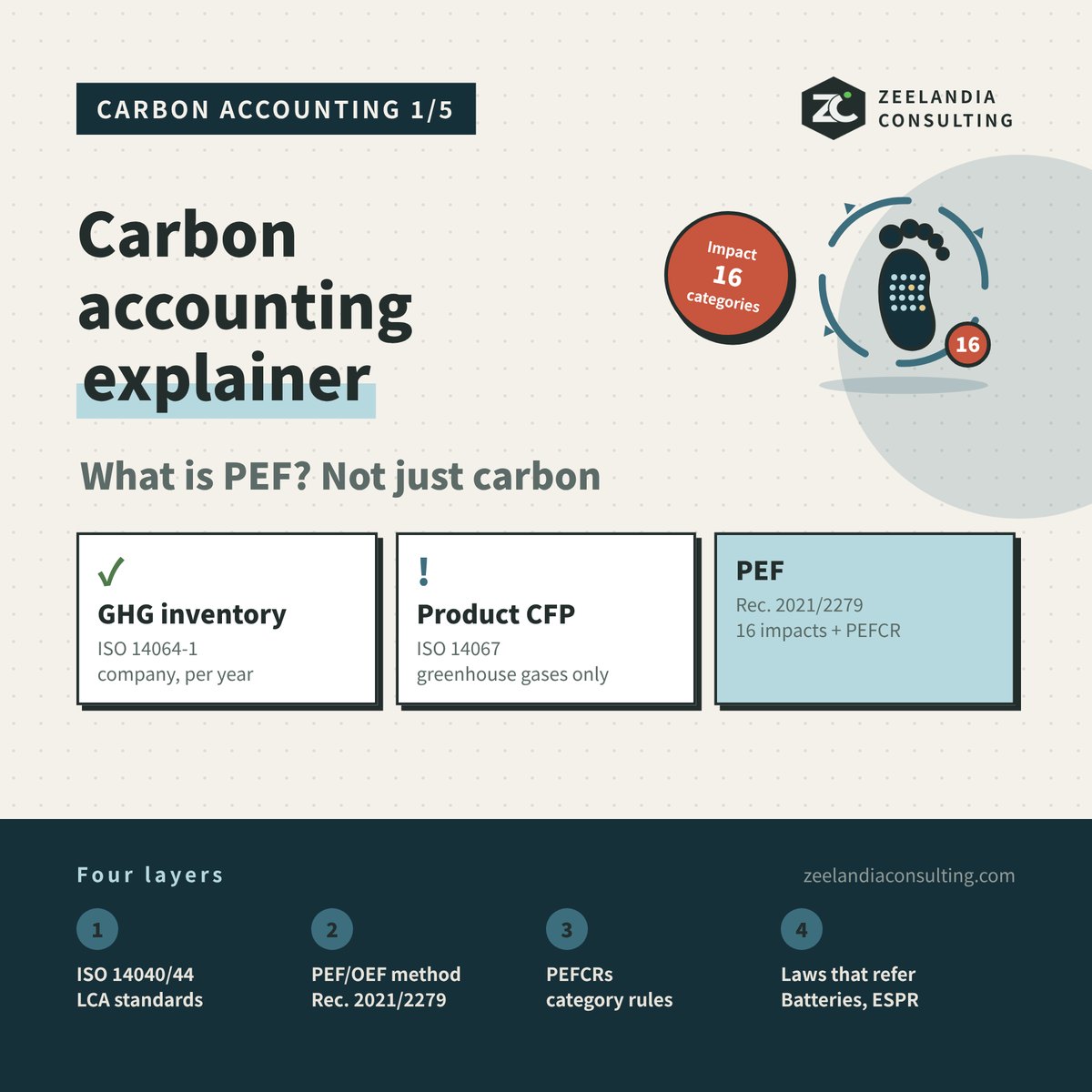
- Part 1: Carbon accounting explainer: what is PEF?
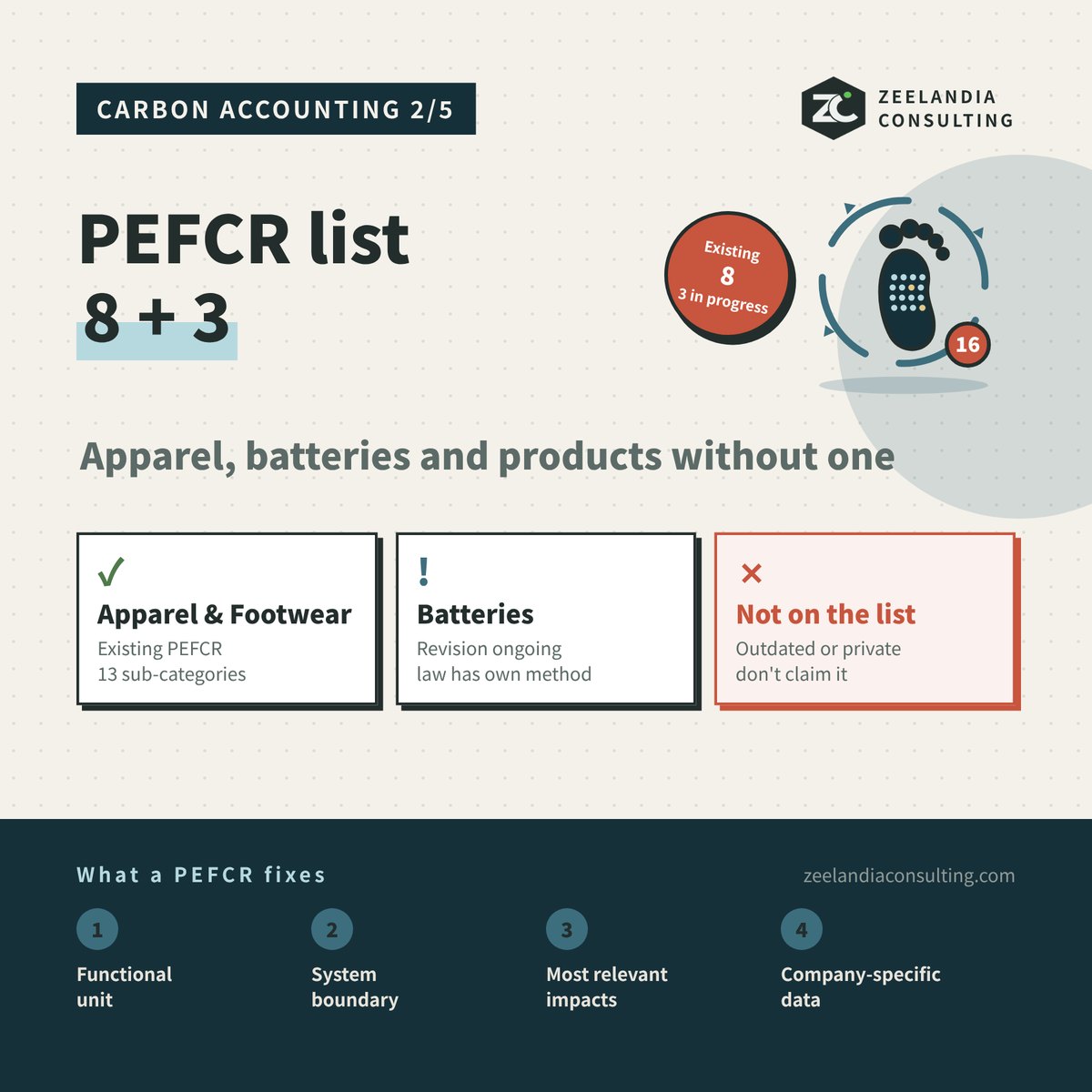
- Part 2: The official PEFCR list and products without a PEFCR
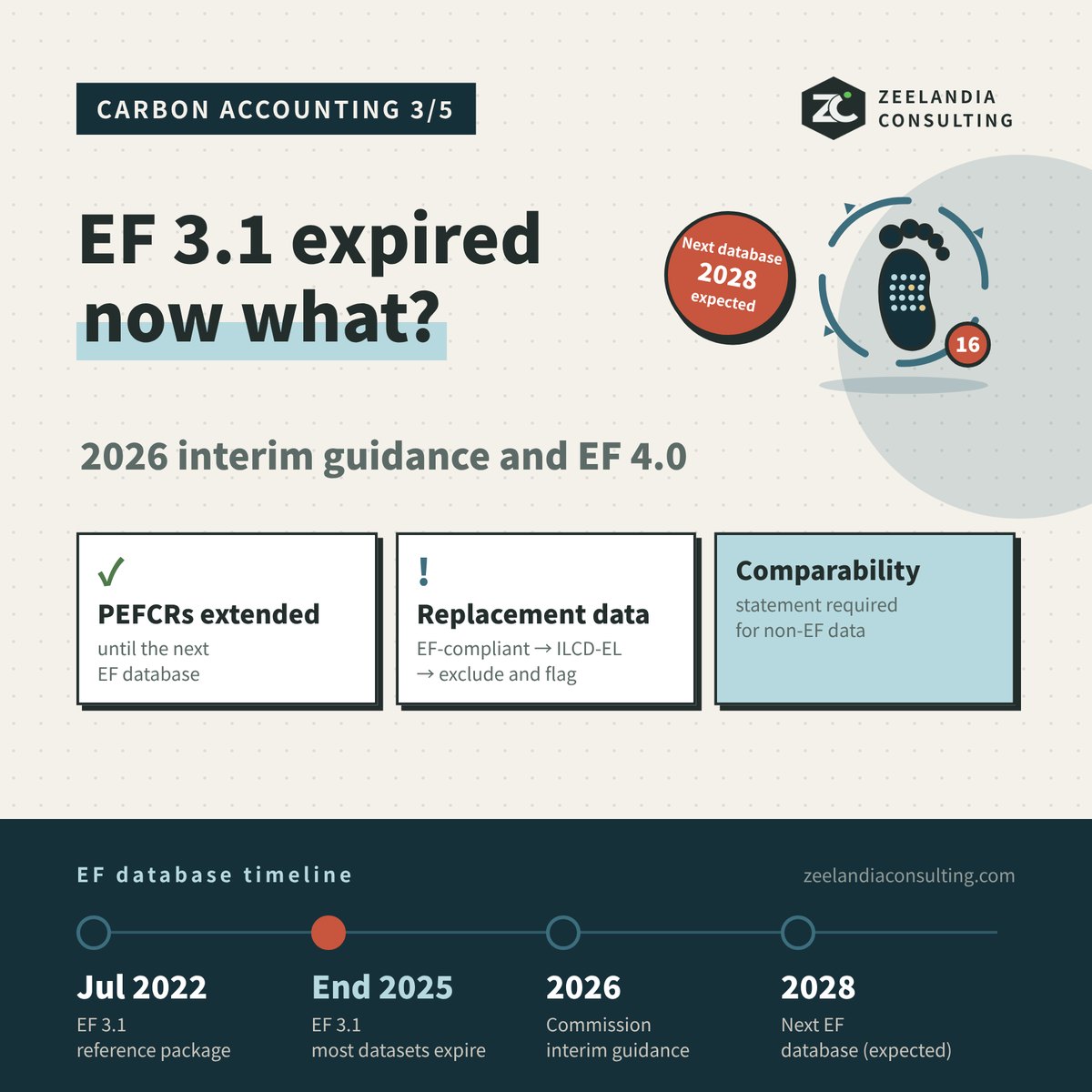
- Part 3: Interim guidance after EF 3.1 expired, and EF 4.0
- Part 4: Which EU laws use PEF
Need help?
ZC can act as your EU regulatory point of contact, help you work out which kind of request a customer is making and what data and third parties it needs, and support ISO 14067 product carbon footprints. For ongoing support, see our outsourced EU regulatory function.
- Book a 30-minute online consultation: pick a time
- Follow ZC on LINE: lin.ee/QKV5RTE
Legal sources and references
- Commission Recommendation (EU) 2021/2279: EUR-Lex
- Regulation (EU) 2023/1542, Article 7: EUR-Lex
- Directive (EU) 2024/825: EUR-Lex
- European Commission, Green Forum, Product Environmental Footprint method: green-forum.ec.europa.eu
This article provides general information, updated to 15 November 2026, and does not constitute legal advice. How to handle a specific request depends on the actual contract and applicable law.
Next step: have you considered these three options?
Sources · Commission Recommendation (EU) 2021/2279 · Regulation (EU) 2023/1542 (Batteries Regulation) · Directive (EU) 2024/825 (Empowering Consumers for the Green Transition) · European Commission, Green Forum: Product Environmental Footprint method. This article is general information and not legal advice for any specific case. Obligations are defined by the Official Journal of the EU.
product carbon footprintPEFPEFCRsupplier data requestScope 3customer questionnairebattery carbon footprintISO 14067